
Arrest Warrants in Humboldt County
An arrest warrant is a written court order telling a peace officer to bring a named or described person before a magistrate. Nevada splits the local path. Union Township Justice Court states that it issues arrest and search warrants and handles the first round of felony and gross-misdemeanor work. A felony can move up to Sixth Judicial District Court after a preliminary hearing. Humboldt County publishes no public arrest-warrant roster. No sample local record appears either. A call to the clerk is the reliable route to current status. The sheriff's page offers a service contact but promises no warrant lookup of its own.
Probable Cause for Humboldt Arrest Warrants
Under NRS 171.106, affidavits filed with an application must show probable cause that an offense happened and that the defendant committed it. A district attorney may ask for a summons instead of a warrant in a fitting case. The judge or magistrate then decides what process issues. That legal start differs from a bench warrant. A missed court date involves a duty the court already imposed. An arrest warrant turns on probable cause about an offense. The clerk can tell you which record type a Humboldt County case involves. The official Nevada arrest-warrant statute sets the verified local record standard.
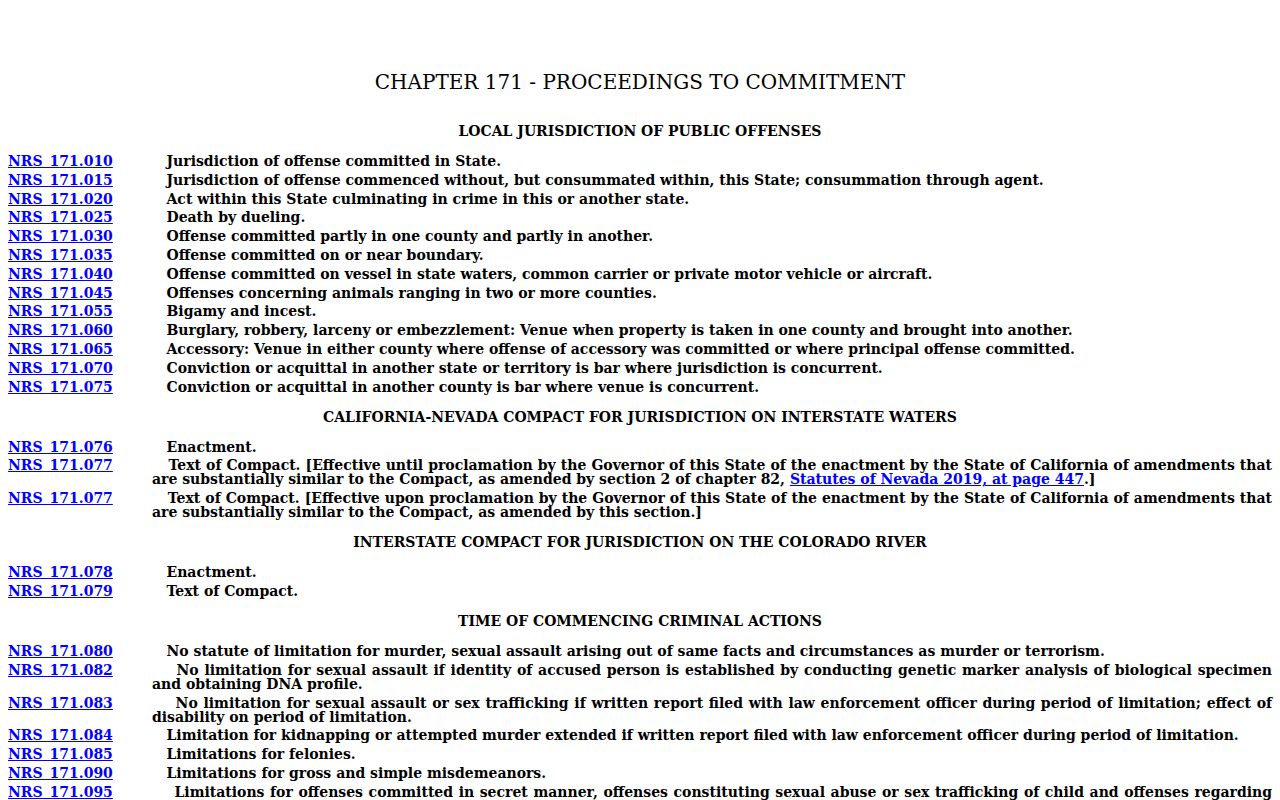
The statute page is a legal reference only, not a Humboldt County case listing or name search.
What a Humboldt County Arrest Warrant Contains
NRS 171.108 lists the core pieces. A warrant must carry the magistrate's signature or office, the defendant's name or a reasonable description, the date and place of issuance, and the offense charged. It must also command that the defendant be arrested and brought before the nearest available magistrate, and state the no-knock status. That is the statutory floor for a Humboldt County warrant.
| Issuing authority | Magistrate signature and office. |
|---|---|
| Person described | Name or reasonable identifying description. |
| When and where | Issue date and county, city, or town. |
| Offense | The offense supporting the probable-cause finding. |
| Command | Arrest and bring the person before a magistrate. |
| No-knock status | Whether the warrant authorizes that special execution method. |
A later docket may add a case number, bond, service return, or status. Humboldt public pages show no sample entry. Ask the clerk rather than guessing at a local format.
Six Humboldt Warrant Record Pieces
The statutory record helps confirm a document ties to the right court and person. It cannot tell you whether an order is still active today. That answer sits with the issuing clerk. Status can change after service, recall, bond, or other court action in a Humboldt County case.
| Record piece | Why it matters | Humboldt source |
|---|---|---|
| Signature and office | Shows judicial authorization | NRS 171.108 |
| Name or description | Identifies the person named | NRS 171.108 |
| Issue date and place | Sets the warrant's origin | NRS 171.108 |
| Offense | States the probable-cause basis | NRS 171.108 |
| Arrest command | Directs the peace officer | NRS 171.108 |
| No-knock status | States the special execution status | NRS 171.108 |
For a Humboldt County status check, bring the case or cause number if you have one. Ask the court which details it can release.
How Humboldt County Warrants Are Served
Union Justice Court issues arrest warrants at the local stage. Which agency executes one depends on the case and each agency's role. HCSO is the county's service, patrol, and dispatch contact. Winnemucca Police and other agencies may also be involved. No official source says one agency serves every Humboldt County warrant. One point is firm, though. The District Court's scam notice says warrants are served in person, and HCSO does not call to demand money. If a caller sets a payment deadline or asks for a gift card, hang up and reach the court or sheriff through a published number.
Union Justice Court
Issuing court for local arrest and search warrants, preliminary hearings, and bail questions.
775-623-6377
HCSO
Service and dispatch contact. No public arrest-warrant roster was located.
775-623-6419
Dispatch: 775-623-6429
Union Court to Sixth District
A felony can begin in Union Township Justice Court with a preliminary hearing, a probable-cause determination, and a bail setting. If the case is bound over, Sixth Judicial District Court becomes the general-jurisdiction trial court. That shift can change which clerk answers a warrant or failure-to-appear question in Humboldt County. The Sixth District Court page lists Judge Michael R. Montero, chambers, clerk contact, and the scam warning. The Criminal Division page describes Monday arraignments and 48-hour hearings. Together they explain why the county runs no single arrest-warrant phone line. The official District Court directory shows the district staff and contact stage in the Humboldt court chain.
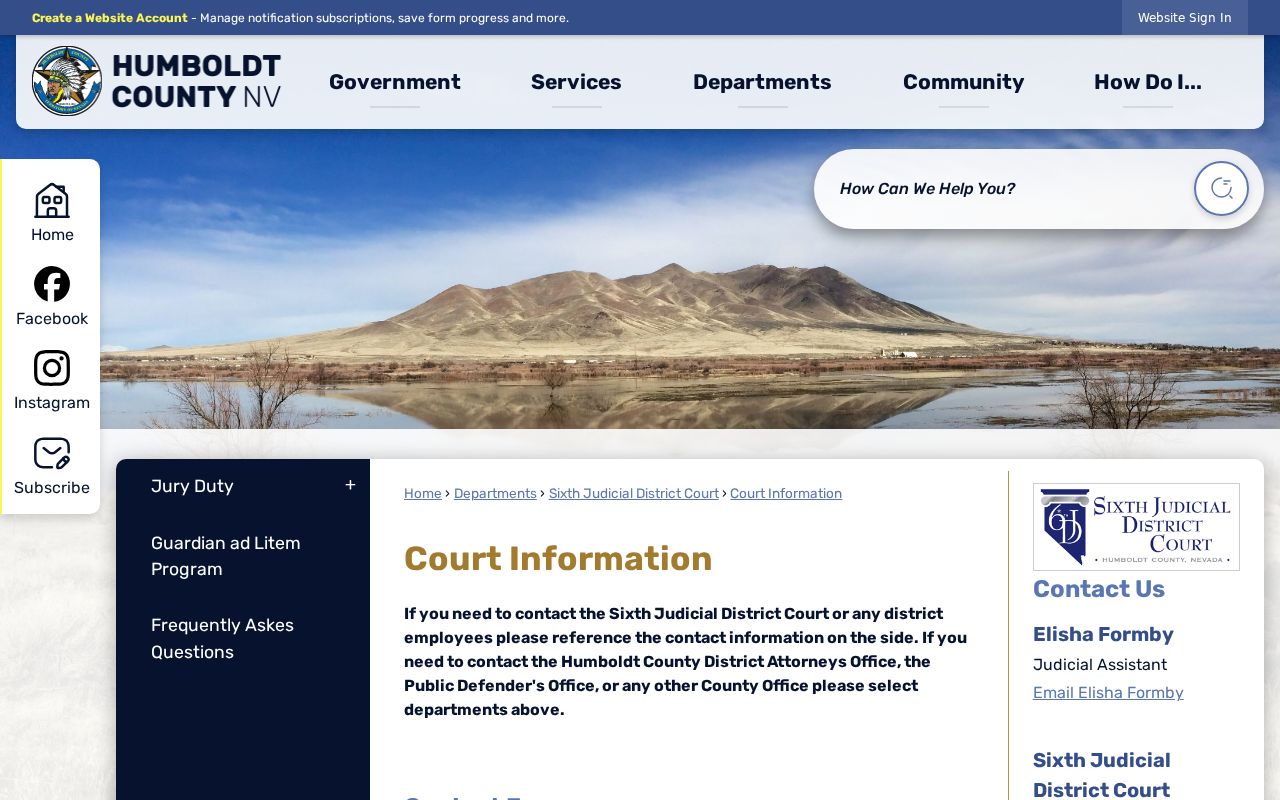
The Humboldt County directory supports a court contact route. The issuing court still controls case-specific status.
Arrest Warrants, Summonses, and Bench Warrants
A summons asks a person to appear. An arrest warrant commands a peace officer to arrest on probable cause. A bench warrant usually answers a missed appearance or a failure to follow a court order. These names are not interchangeable, even when each can lead to court or custody action in Humboldt County.
| Process | Typical reason | First question |
|---|---|---|
| Summons | Court chooses notice to appear | What date and court are listed? |
| Arrest warrant | Probable cause about an offense | Which magistrate and court issued it? |
| Bench warrant | FTA or court-order failure | Can the court recall or reset it? |
A Humboldt County clerk can identify the actual process from the case record. Do not infer it from a caller's wording.
Sealed Humboldt County Matters
A missing public record does not prove that no warrant exists. Nevada criminal procedure may seal search-warrant support. Juvenile justice information is confidential under NRS 62H.025. A fresh warrant or a file held by another court can also be absent from a public Humboldt County page.
A Nevada Public Records Act request should seek releasable portions and ask for the legal authority if access is denied. It cannot force release of protected material.
For a written request, name the court or agency, describe the record, and give a date range. Ask for electronic delivery when available. NRS 239.0107 sets the fifth-business-day response action. The official Nevada Public Records Act explains the request and disclosure framework for Humboldt County records.
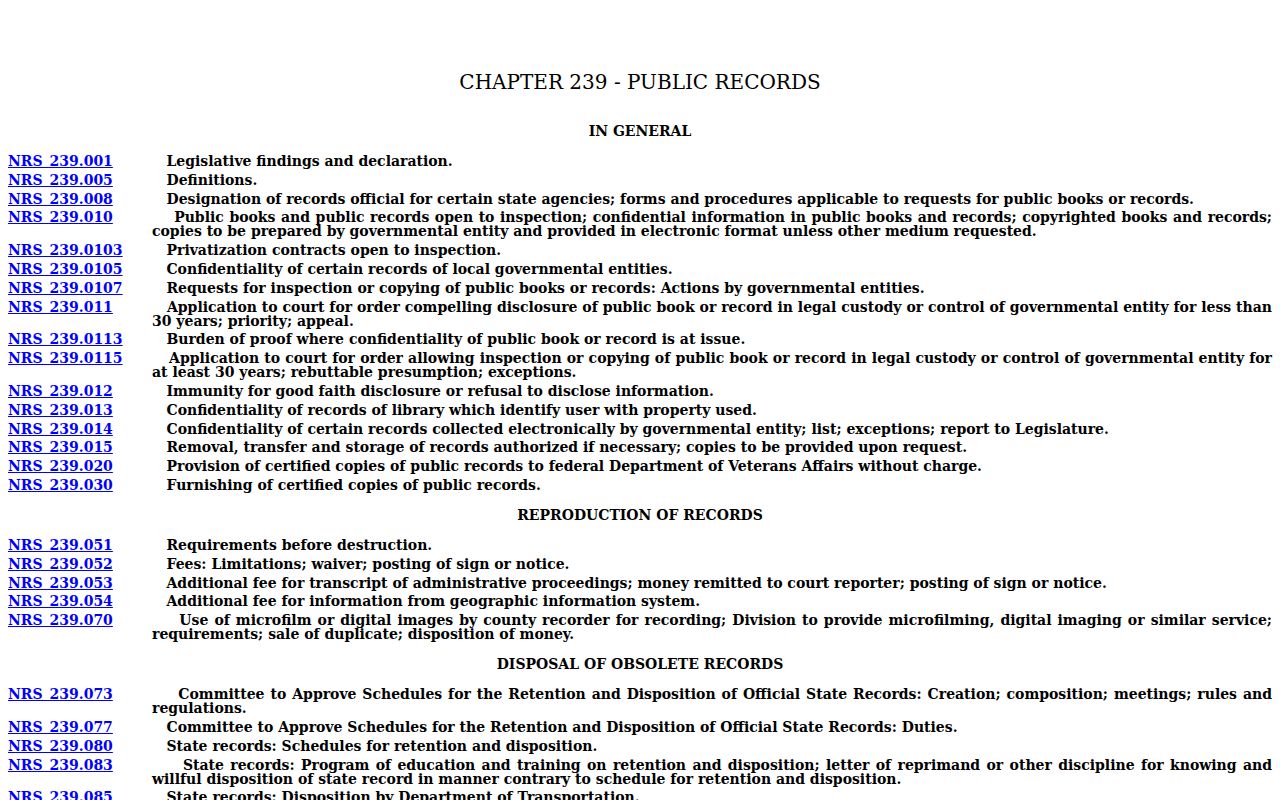
The statute supports a records request but does not open sealed or juvenile material.
Handling an Arrest Warrant in Humboldt County
Once a lawyer or the court confirms an active warrant, your first call belongs to the issuing clerk. That office can tell you what the judge requires, whether your attorney may appear for you, and whether bond has been set. Ask where the required appearance happens. Humboldt County publishes no self-surrender window, ID rule, or full bond schedule, so these details must come from the clerk directly.
- Confirm the court, case identifier, and warrant type.
- Ask about counsel, recall, appearance, and bond.
- If arrest occurs, ask detention where bail information is handled.
- Ask about the $50 Justice Court filing fee when a bail or property bond is filed there.
- After action, obtain confirmation of the warrant status and any DMV step.
Do not pay a phone caller claiming to be a deputy. Verify the matter through the published court or HCSO contact.
Humboldt County Cash Bail and Hearing
Humboldt County's warrant notice is blunt: post cash bail after an arrest or stay in custody until a judge acts. Union Criminal Division materials describe 48-hour hearings for setting bail and deciding probable cause. The county posts no bond schedule. No surety list or property rules appear either. For booking or custody questions, call detention at 775-623-6423. The legal status of the warrant is a question for the issuing court, not jail staff. Remember that posting bond fixes only the custody problem; the underlying case stays open, and record systems may not all update at once.